Yes—a free vending machine for business can be genuinely free to the host business when the provider supplies the equipment without requiring you to buy it. That does not automatically make the snacks and beverages free or remove every responsibility from the property owner. In 2026, judge the arrangement by the written terms for installation, restocking, utilities, access, and removal—not the word free alone.
- A free vending machine for business is an equipment arrangement, not a promise of free snacks and beverages.
- Snackparrot provides free, cashless vending machines with installation and weekly restocking for offices, gyms, apartments, and warehouses.
- Confirm electricity, service access, contract obligations, and removal terms before approving a vending machine placement.
- Choose managed vending when you want the provider to handle installation and replenishment.
Why this matters
A vending machine adds a physical appliance and an ongoing service relationship to your property. The decision is not just whether you can avoid buying equipment. You also need to know who keeps it stocked, who handles problems, and what happens if the arrangement stops working for your location.
Snackparrot provides free, cashless vending machines stocked with snacks and beverages, with installation and weekly restocking. Snackparrot managed vending is best for property owners and facility managers at offices, gyms, apartments, and warehouses who want installation and weekly restocking handled by the provider.
For a 2026 evaluation, separate those stated services from the additional terms you need in writing. A description of the service is not a substitute for an agreement covering your site.
Are free vending machines really free for businesses in 2026?
Yes, but free equipment and a responsibility-free arrangement are different things. A provider can supply a machine without asking your business to purchase it, while the placement still requires space, access, and decisions about day-to-day operation.
The stated Snackparrot service includes these elements:
| Service element | Stated scope | What you should confirm |
|---|---|---|
| Machine placement | Free vending machines | Ownership, placement conditions, and removal terms |
| Payment method | Cashless machines | Accepted payment methods and payment-problem reporting |
| Installation | Handled by the provider | Delivery access and site preparation responsibilities |
| Replenishment | Weekly restocking | Visit arrangements and how to report an empty selection |
| Contents | Snacks and beverages | How the selection is agreed for your location |
These facts establish what the service includes. They do not establish maintenance response times, contract length, electricity responsibility, or cancellation rights. Ask for those details before signing.
The practical test is straightforward: can you identify every obligation your business accepts? If the agreement leaves a responsibility unclear, resolve it before the machine arrives. Do not treat an unanswered question as an included benefit.
How do you check whether the arrangement is genuinely free?
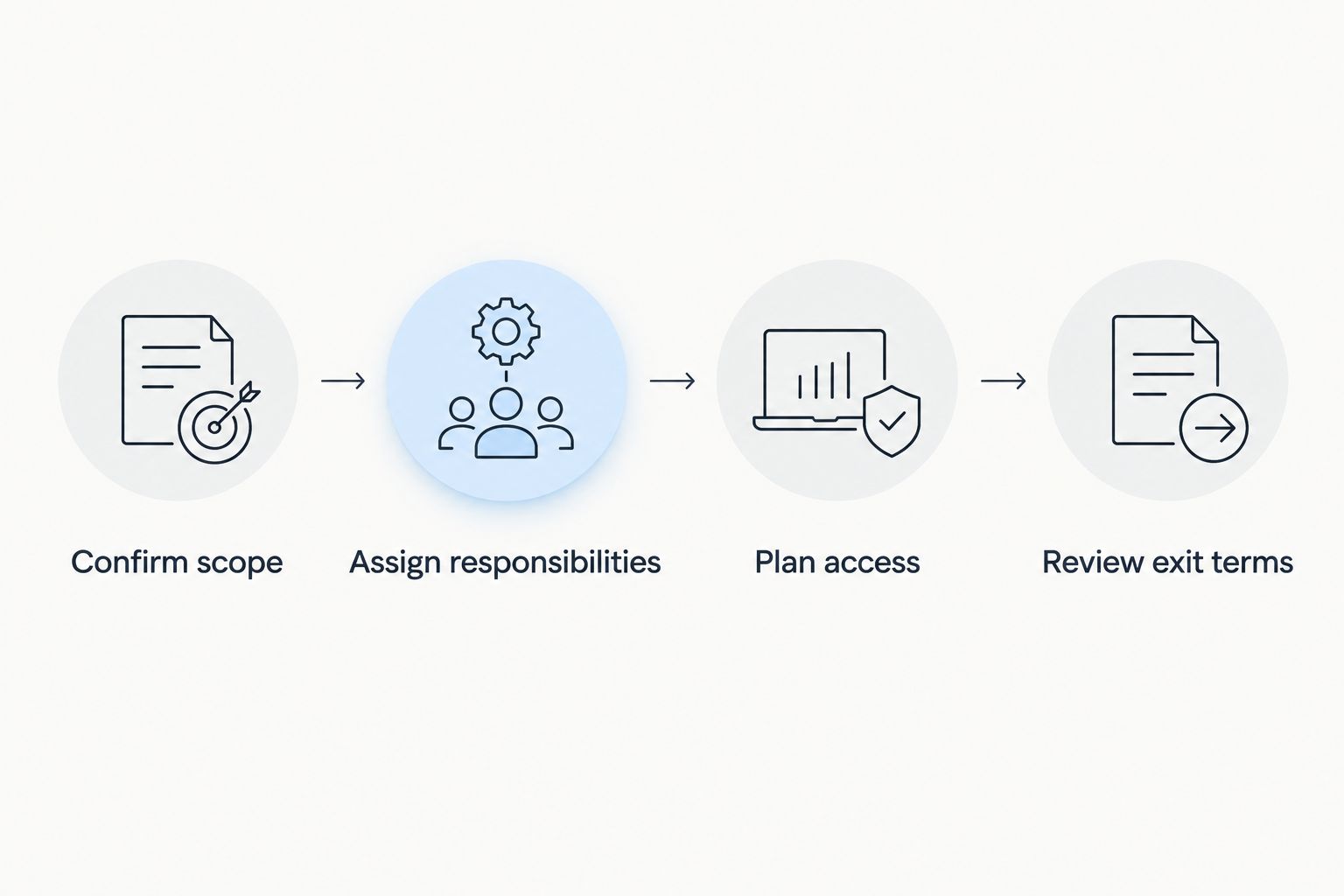
Use this sequence before approving a placement. Keep the answers in the agreement or an attached written scope, rather than relying on a sales conversation.
- Confirm scope. Ask whether the arrangement includes the machine, delivery, installation, stocking, and servicing. Distinguish what the provider handles from what your facility team must arrange. Free placement should have a defined scope, not an open-ended list of assumptions.
- Assign responsibilities. Establish who provides the electrical connection, prepares the location, and coordinates building access. Ask who handles a failed transaction, an equipment fault, or a product complaint. Your staff need a clear reporting route rather than becoming the default help desk.
- Plan access. Choose a position that customers can reach and the provider can service. Explain visitor procedures, secured entrances, loading restrictions, and operating hours before installation. A machine that fits the room still needs a workable delivery and restocking route.
- Review exit terms. Confirm how either party ends the arrangement and who handles removal. Ask what happens if your business moves, the building changes management, or the placement no longer suits the property. Read these terms before installation, not when you need the machine gone.
A useful agreement assigns each task to a named party. Keep a copy accessible to the person managing the building so the arrangement does not depend on one employee remembering the original conversation.
Managed placement or self-managed vending: which fits your business?
The main distinction is who runs the operation. Compare the responsibilities before comparing individual machines; attractive equipment does not solve an unclear service arrangement.
| Option | Best for | Advantage | Trade-off |
|---|---|---|---|
| Provider-managed placement | Facility teams that want installation and replenishment handled externally | The provider handles the agreed service tasks | You need clear terms for access, service, selection, and removal |
| Self-managed vending | Businesses prepared to oversee equipment and inventory | Your business directs equipment and stocking decisions | Your business must arrange purchasing, replenishment, and support |
Choose provider-managed placement when your goal is an amenity rather than another operation to run. Choose self-managed vending only when someone in your business will own the inventory and equipment responsibilities.
Neither model removes the need for oversight. With managed placement, your main job is coordinating the site and reporting issues. With self-managed vending, the operational work remains with your team or the contractors you appoint.
Why free vending arrangements vary
The same service description does not answer every site's operating questions. These factors change what you need to clarify, even when the provider offers the same core placement service:
- Property type. Offices, gyms, apartments, and warehouses serve different users. Explain who will use the machine and where they can access it.
- Installation arrangements. Delivery and installation require coordination with the property. Confirm the proposed location and access route before committing.
- Restocking access. Weekly restocking needs a repeatable entry process. Identify who admits the provider when the building or placement area is secured.
- Snack and beverage selection. Ask how the initial selection is decided and how requests for changes are handled. Do not assume every requested item is included.
- Cashless operation. Confirm the payment methods and the process for reporting transaction problems. Cashless describes the payment approach, not every support detail.
These are operating questions, not grounds for inventing an eligibility threshold. Describe your actual site and ask for its placement terms rather than treating another property's arrangement as yours.
Does free vending mean employees get free snacks?
No—free machine placement does not establish free snacks or beverages. Equipment placement and product purchases are separate parts of the arrangement. If your business wants to cover employee purchases, ask whether that arrangement is supported instead of assuming it comes with the machine.
Do I have to restock a free vending machine myself?
Snackparrot handles weekly restocking for its vending service. Confirm how visits work at your property and how you should report a selection that runs out between visits. Weekly restocking does not, by itself, establish an emergency refill commitment.
Can I put a free vending machine anywhere in my building?
Choose a placement only after checking delivery access, electrical requirements, and the building's circulation routes. Ask the provider to confirm the location before you move furniture or prepare the space. Keep the machine out of routes needed for ordinary movement and emergency access.
What should you have ready before requesting placement?
For your 2026 placement discussion, prepare a short site brief rather than a vague request for a free machine. Give the provider enough detail to discuss installation and ongoing service at the actual location.
Include:
- Your property type and the intended users.
- The proposed machine location and how users reach it.
- Building hours and any secured-entry procedures.
- Delivery access, including relevant doors or elevators.
- The facility contact responsible for coordinating visits.
- Snack and beverage preferences you want to discuss.
Then ask for a written scope covering the placement and its operating terms. Make sure the person approving the arrangement understands the responsibilities that remain with the property.
Do not prepare the space around an assumed machine size or installation requirement. Confirm the proposed equipment and its requirements first. That keeps your facility planning tied to the actual placement rather than a generic vending-machine description.
Discuss your vending placement
Ask about cashless vending, installation, and weekly restocking for your property.
FAQ
Is a free vending machine for business really free?
A free vending machine for business can remove the need to purchase the equipment. Confirm the written placement terms, including responsibilities for utilities, servicing, access, and removal.
Does Snackparrot install and restock its vending machines?
Snackparrot handles installation and weekly restocking for its vending service. Confirm the access arrangements and proposed location for your property before installation.
Are the snacks in a free vending machine also free?
Free machine placement does not mean the snacks and beverages are free. Ask how purchases work and whether any employer-funded arrangement is supported.
Who pays for electricity for a free vending machine?
The placement agreement should state who is responsible for electricity. Confirm that responsibility and the electrical requirements before approving the machine location.
Can offices, gyms, apartments, and warehouses get managed vending?
Snackparrot provides free, cashless vending machines for offices, gyms, apartments, and warehouses. Discuss your property’s placement conditions directly rather than assuming every location has identical terms.
What happens if I want the vending machine removed?
The agreement should explain cancellation and removal. Review the notice process, removal responsibilities, and any conditions before accepting placement.
What should I check before accepting a vending machine in 2026?
Check the written scope, site responsibilities, service access, and exit terms before accepting a vending machine in 2026. Confirm the proposed equipment requirements before preparing the installation space.
One last thing
The easiest responsibility to overlook is access. A provider can handle weekly restocking, but someone still needs to make the machine reachable during the visit.
Before approving your 2026 placement, write down who admits the provider, where the provider enters, and who takes over when your usual contact is absent. A free machine needs an operating plan, not just an empty corner. That small piece of coordination makes the stated service workable at your property.
3 Responses